Percussive Therapy Explained: Benefits, Safety, and Tools
Percussive therapy applies rapid, repetitive pulses directly to muscle tissue to increase circulation, reduce tightness, and produce short-term gains in strength and flexibility. According to a 2023 systematic review, a single session can deliver acute improvements in muscle performance, while consistent use over multiple treatments is what moves the needle on musculoskeletal pain.
- Circulation boost: Rapid pulses drive blood flow to targeted muscle groups within minutes.
- Acute flexibility and strength gains: Research confirms short-term improvements after a single application.
- Symptom relief: Regular sessions help reduce soreness and perceived muscle tightness.
Table of Contents
- How percussive therapy works on your muscles and nerves
- What the research actually shows about percussive therapy
- What types of percussive therapy tools are available?
- How to use percussive therapy safely
- Practical routines for warm-up, recovery, and soreness
- How percussive therapy compares to foam rolling and manual massage
- When percussive therapy isn’t enough
- Key Takeaways
- The case for conservative, targeted use
- Thrival: targeted muscle relief without the motor
- Useful sources and further reading
How percussive therapy works on your muscles and nerves
The core mechanism is a one-two punch: rapid pulses change both what your nervous system registers and how your fascia behaves. Devices can deliver up to ~40 percussions per second, stimulating mechanoreceptors and proprioceptors that compete with pain signals traveling to the brain.
That neural competition is gate control theory in practice. When high-frequency mechanical input floods the sensory pathway, the brain’s perception of pain is temporarily reduced. The PMC mechanistic review identifies this alongside two other mechanisms: mechanical disruption of adhesions between muscle fibers, and changes to fascial fluid viscosity.
On the fascia side, rapid pressure redistributes thickened fascial fluid, making the connective tissue more pliable and supporting better range of motion. A Cleveland Clinic physical therapist described the mechanical effect as working like a “mini hammer” that softens adhesions and elongates muscle fibers. Percussive therapy itself evolved from tapotement, the manual technique where clinicians apply rhythmic compressive tapping with the edge of the hand or fingertips.
Key mechanism: Effective protocols balance frequency (Hz), amplitude (mm), and torque (lbs) rather than maximizing any single parameter.
What the research actually shows about percussive therapy
The 2023 systematic review is the clearest evidence summary available. A single application produces acute increases in muscle strength, explosive strength, and flexibility. Reducing musculoskeletal pain, however, requires multiple treatment sessions.
Research finding: The review found a significant relationship between single percussive therapy application and acute performance improvements, but pain reduction required repeated sessions.
Practical takeaways from the current evidence base:
- Pre-activity use produces measurable short-term flexibility and strength gains.
- Post-activity use supports faster perceived recovery and reduced soreness.
- Pain relief is real but requires consistency, not a one-time session.
- Study limitations matter: The literature notes inconsistent protocols, variable methodological quality, and underrepresentation of female participants. Treat results as promising but protocol-dependent.
For a broader look at muscle release therapy benefits, the evidence points in the same direction: targeted, consistent application outperforms sporadic use.
What types of percussive therapy tools are available?
Percussive therapy tools fall into three categories, each with real trade-offs.
| Evaluation Criteria | Motorized Massage Guns | Manual Percussive Tools | Hand Tapotement |
|---|---|---|---|
| Speed/frequency control | Adjustable, high precision | Fixed or limited | Skill-dependent |
| Amplitude | High (deep tissue reach) | Moderate | Variable |
| Portability | Moderate (battery required) | High | N/A |
| Cost | — | — | Free |
| Skill required | Low | Low to moderate | High |
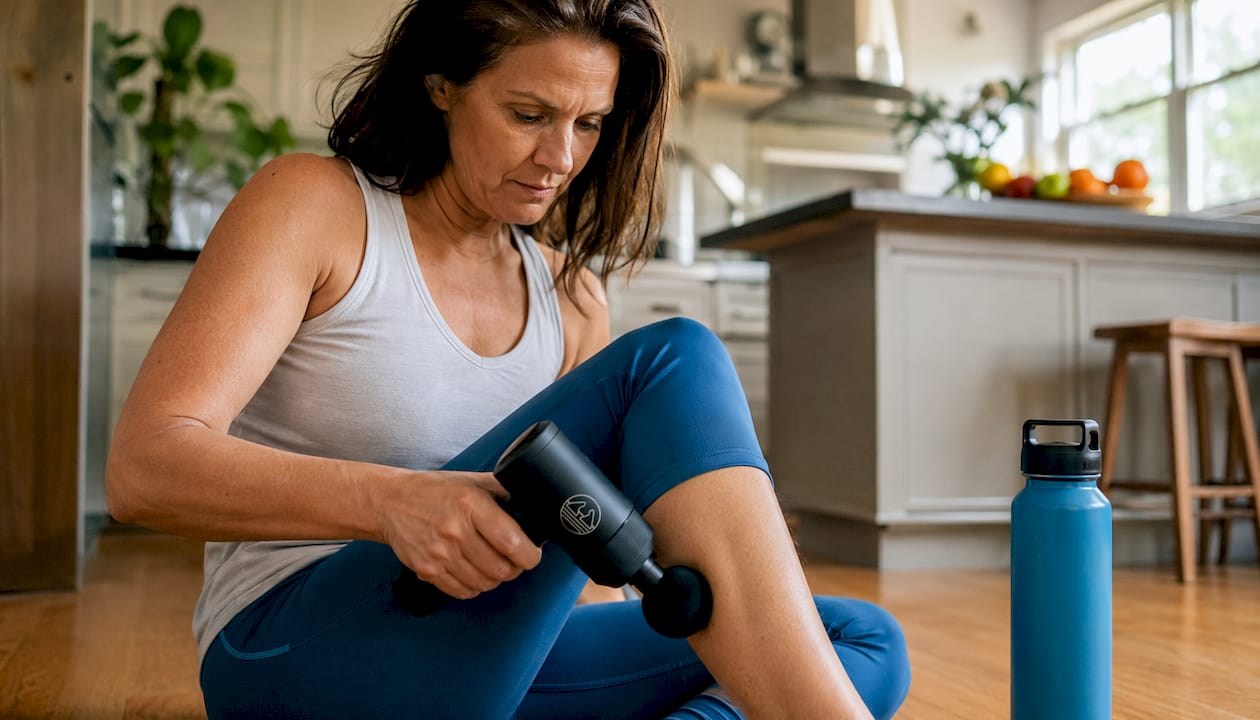
Motorized massage guns deliver the most consistent frequency and amplitude, making them the default for athletes who want repeatable results. Manual percussive tools, including non-motorized handheld devices, offer portability and lower cost but give you less control over depth and speed. Hand tapotement, the original technique, requires trained hands to be effective and is typically performed by a licensed massage therapist.
The right category depends on your goals. For targeted, precise relief without vibration sensitivity, a non-motorized manual tool often fits better than a high-amplitude motorized device.
How to use percussive therapy safely
The core rule: target the muscle belly or tendon, never a joint or bony surface.
Session guidelines:
- Start at the lowest intensity and increase only if the tissue tolerates it.
- Keep each muscle group to 1–2 minutes per session.
- Use slow, deliberate passes rather than holding the device stationary.
- Breathe steadily throughout; don’t hold your breath against the pressure.
Contraindications and red flags:
- Open wounds, bruising, or acute swelling in the target area
- Known or suspected deep vein thrombosis (DVT) risk factors
- Recent fractures or post-surgical sites
- Certain implanted devices (consult your physician first)
- Nerve damage or areas with reduced sensation
Pro Tip: Never apply a high-amplitude device directly over small bony prominences like the spine, shin, or collarbone. The muscle belly beside the bone is the target, not the bone itself. Getting this wrong causes irritation, not relief.
For more muscle therapy safety tips, pairing correct placement with appropriate intensity is what separates effective use from counterproductive use.
Practical routines for warm-up, recovery, and soreness
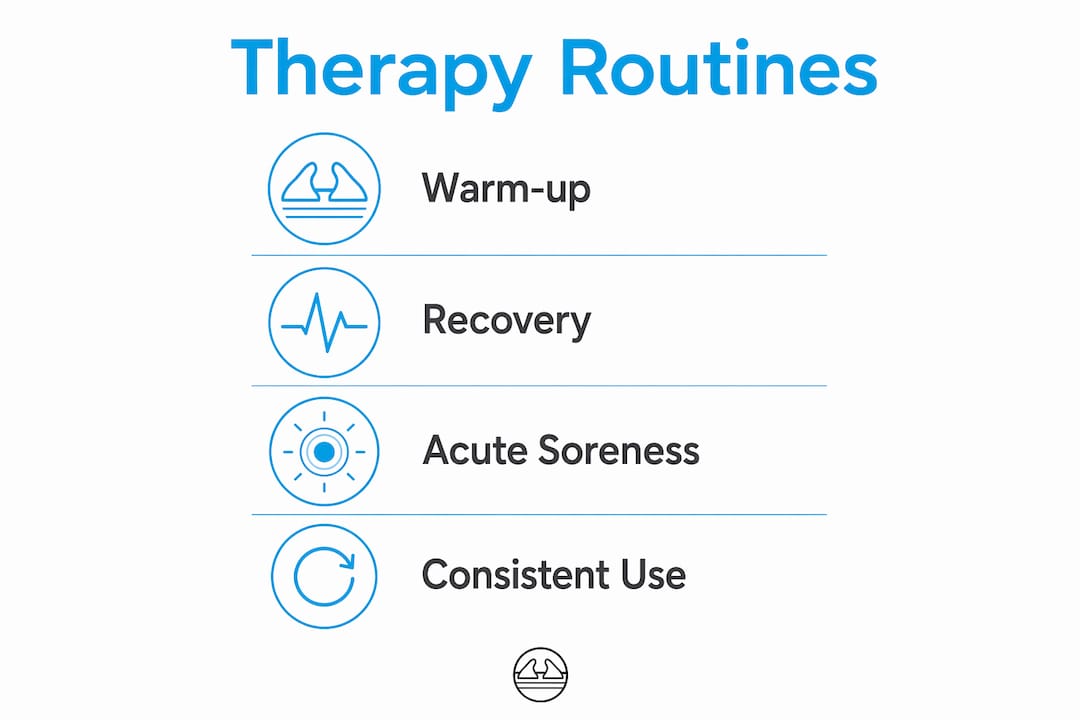
These protocols are pragmatic starting points, not rigid clinical prescriptions. Adjust based on how your tissue responds.
| Routine | Duration | Suggested Intensity |
|---|---|---|
| Pre-workout warm-up | 1–2 minutes per muscle group | Low to moderate |
| Post-workout recovery | 1–2 minutes per muscle group | Low |
| Acute soreness relief | 1–2 minutes per muscle group | Low |
Warm-up: Short, brisk pulses over the target muscles prime blood flow before activity. Pair with dynamic movement immediately after, such as leg swings or arm circles, to reinforce the range-of-motion gains.
Recovery: Slower, lighter passes after training help flush metabolic byproducts and reduce perceived soreness. Follow with gentle static stretching to extend the flexibility window.
Acute soreness: Brief, low-intensity contact on the sore area reduces tightness without aggravating inflamed tissue. If the area feels hot or swollen, skip the device entirely and apply ice instead.
Building recovery routines into your training consistently produces better results than using any tool reactively.
How percussive therapy compares to foam rolling and manual massage
Each method has a distinct use case. Choosing the right one saves time and produces better outcomes.
Percussive therapy strengths:
- Fast, targeted relief for a specific muscle group
- Effective pre-activity primer for flexibility and strength
- No partner or clinician required
Foam rolling strengths:
- Broader fascial coverage across large muscle groups
- Lower cost and widely available
- Pairs well with soft tissue therapy for general maintenance
Manual massage strengths:
- Hands-on clinical assessment alongside treatment
- Adaptive pressure based on real-time tissue feedback
- Best for complex or chronic conditions
When to choose each:
- Percussive therapy: quick targeted relief before or after training, or when you need to address a specific tight spot in under two minutes.
- Foam rolling: broader warm-up or cooldown work covering the quads, hamstrings, or thoracic spine.
- Manual massage: persistent pain, post-injury recovery, or when self-treatment hasn’t resolved the issue after two to three weeks.
When percussive therapy isn’t enough
Self-treatment has real limits. These signs mean it’s time to consult a physical therapist, sports medicine physician, or orthopedic specialist:
- Pain that persists or worsens beyond a normal recovery window (typically 5–7 days for muscle soreness)
- Neurological symptoms: numbness, tingling, or weakness in a limb
- Unexplained swelling, heat, or redness that doesn’t resolve
- Pain following a fall, collision, or acute injury
- Post-surgical areas where tissue integrity is uncertain
A licensed clinician can diagnose the underlying cause and may incorporate percussive tools as part of a supervised rehabilitation plan. Self-treatment is a complement to professional care, not a replacement. For chronic pain management, a structured clinical approach consistently outperforms unsupervised self-care alone.
This article is general information, not medical advice. Confirm the right approach for your specific condition with a qualified clinician.
Key Takeaways
Percussive therapy delivers real, measurable short-term benefits, but pain relief requires consistent use and correct technique.
| Point | Details |
|---|---|
| What it is | Rapid pulses to muscle tissue that reduce pain signals and improve short-term flexibility and strength. |
| Primary short-term benefit | A single session produces acute gains in strength and flexibility, per the 2023 systematic review. |
| Core safety rule | Target the muscle belly or tendon only; never apply directly over joints, bones, or acute swelling. |
| When to see a clinician | Persistent or worsening pain, neurological symptoms, or unexplained swelling require professional evaluation. |
| Thrival system | Thrival’s non-motorized, attachment-based tool delivers targeted manual pressure for precision relief without vibration. |
The case for conservative, targeted use
Percussive therapy gets oversold as a recovery cure-all, and that framing does real harm. The research is clear: acute performance benefits are genuine, but they’re short-lived without movement to reinforce them. A two-minute pass with a massage gun before a workout is useful. Using one for twenty minutes on an already-inflamed area is not.
What actually works is pairing brief, targeted sessions with active movement immediately after. The fascia and muscle tissue respond to the stimulus, but the range-of-motion gains only stick when you move through them. Percussive therapy opens a window; stretching and exercise are what you do with it.
The other thing worth saying plainly: high amplitude and high frequency are not always better. Sensitive areas, smaller muscle groups, and post-injury tissue often respond better to lighter, sustained pressure than to aggressive percussive pulses. Matching the tool’s parameters to the tissue’s current state is the skill that separates effective recovery from wasted effort.
Thrival: targeted muscle relief without the motor
If you’ve worked through the evidence above and realized that precision matters more to you than raw percussion speed, Thrival’s non-motorized recovery system is worth a close look. It’s built around a single base board with interchangeable attachments, including the Wave, Bullseye, Arch, and Ballhead, each designed to target specific muscle groups like the psoas, thoracic spine, hips, and shoulders.
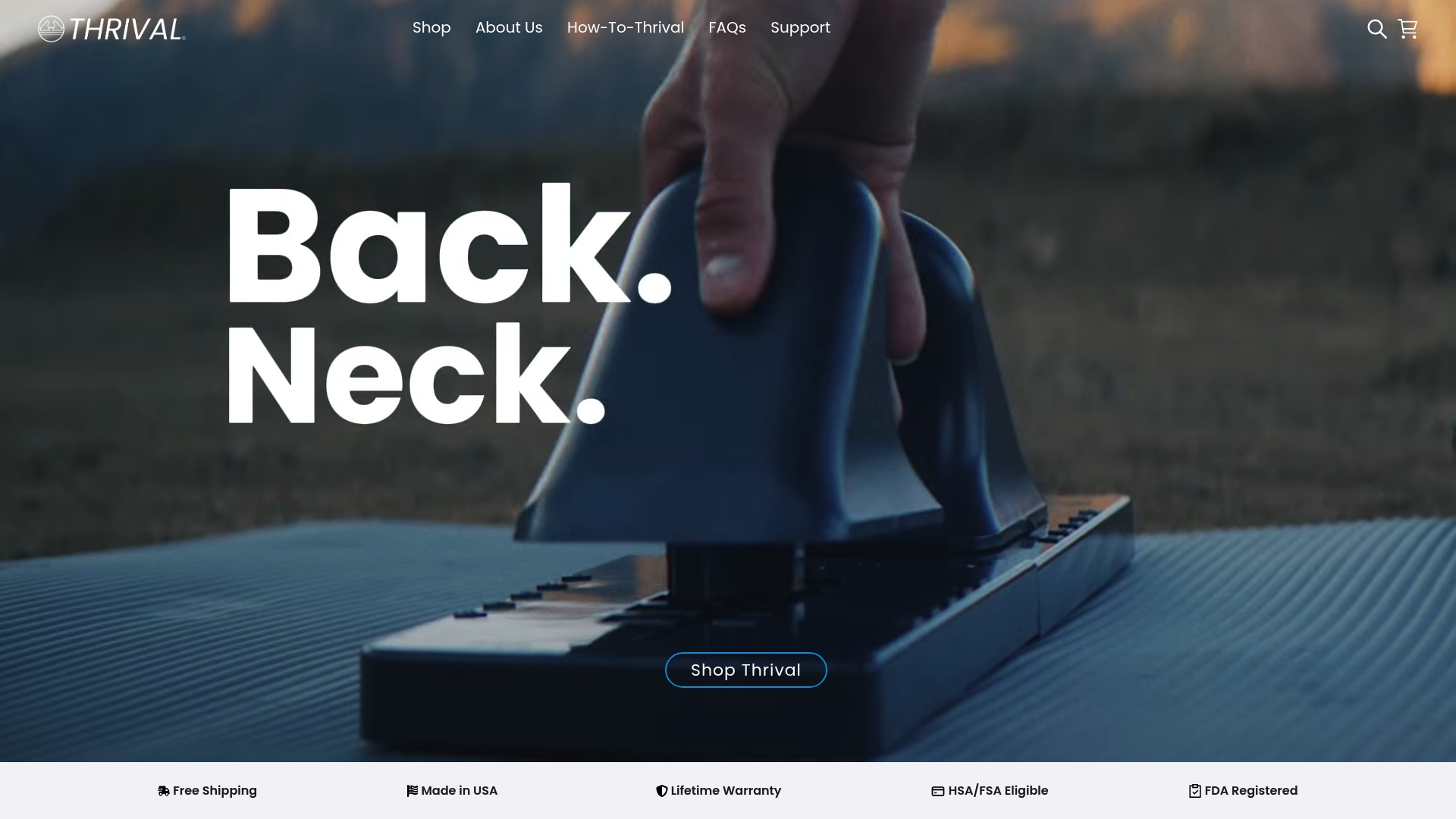
The system is manufactured in the US, FDA-registered, and backed by a lifetime warranty. No battery, no charging, no vibration sensitivity issues. You control the pressure with your own body weight, which means you get sustained, precise contact rather than rapid pulses. For athletes and desk workers dealing with tight spots in the back, hips, or neck, that level of control is often exactly what the tissue needs.
Thrival also includes an instructional app with guided routines so you’re not guessing at placement or duration. Explore the full system at Thrival.com and find the attachment that fits your recovery needs.
Useful sources and further reading
- 2023 Systematic Review on Percussive Therapy (PubMed) — Primary research anchor; covers acute performance outcomes and pain reduction findings.
- Mechanistic Review: Gate Control, Fascia, and Device Parameters (PMC) — Explains the physiological mechanisms and notes study limitations.
- Massage Gun Systematic Review (PMC) — Broader review of massage gun effects across clinical and athletic populations.
- Cleveland Clinic: Do Massage Guns Actually Work? — Clinical commentary from a physical therapist on practical use and limitations.
- UCLA Health: Percussive Therapy and Fascia — Explains fascia fluid mechanics and range-of-motion effects.
- Mayo Clinic: How a Massage Gun Works — Overview of device mechanics, percussion rates, and sensory effects.
Recommended
- Why use massage tools: Your guide to better recovery
- Targeted muscle therapy for real pain relief and recovery
- Soft tissue therapy workflow for athletes
- Trigger point therapy: targeted relief for muscle pain
source http://www.expertclick.com/NewsRelease/Percussive-Therapy-Explained-Benefits-Safety-and-Tools,2026316070.aspx


Comments
Post a Comment