What Causes Muscle Knots: Science, Triggers, and Relief
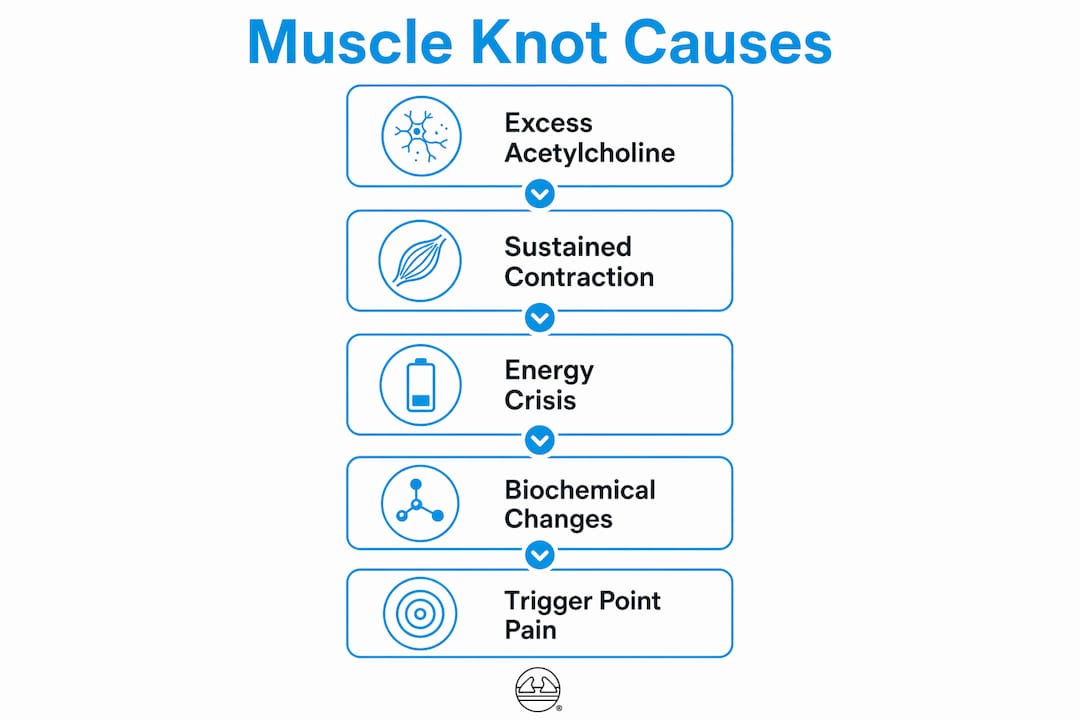
Muscle knots, clinically defined as myofascial trigger points (MTrPs), are hyperirritable spots in skeletal muscle where clusters of sarcomeres become locked in sustained contraction due to a local energy crisis at the motor endplate. This is not a structural deformity or actual tangled tissue. What causes muscle knots is a precise physiological failure: excess acetylcholine floods the neuromuscular junction, sarcomeres shorten and compress local capillaries, and the muscle loses access to the ATP it needs to relax. The result is a palpable, tender nodule that can radiate pain far from its origin. Understanding the mechanism is the first step toward doing something about it.
What causes muscle knots at the cellular level?
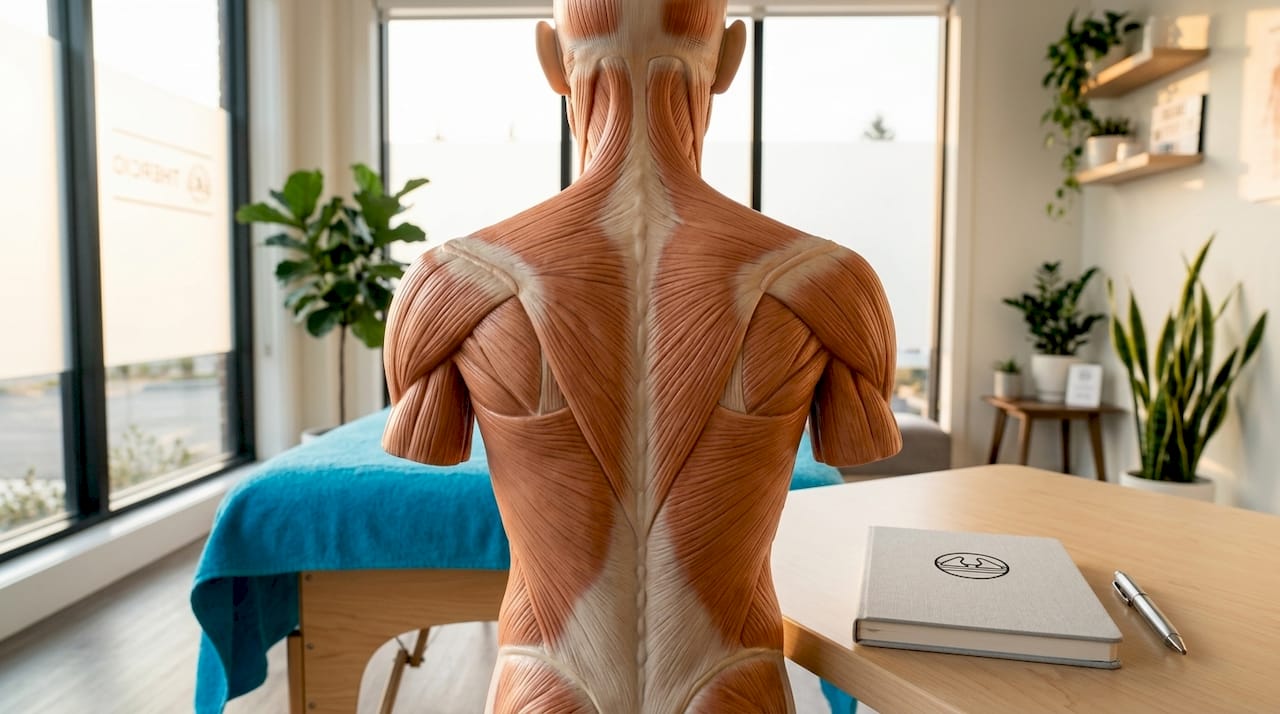
The biology behind muscle knot formation centers on what researchers call the integrated hypothesis of trigger points. At the motor endplate, the nerve terminal releases acetylcholine to signal muscle contraction. When excess acetylcholine floods the junction, sarcomeres contract continuously rather than cycling through normal contraction and relaxation. This sustained shortening is the defining event.
That sustained contraction compresses the small capillaries running through the muscle tissue. Reduced blood flow creates localized ischemia, which cuts off oxygen and glucose delivery. Without adequate oxygen, the mitochondria cannot produce ATP at the rate the muscle demands. ATP is required not only for contraction but also for the calcium pumps that pull calcium ions back into the sarcoplasmic reticulum after a contraction. When ATP runs short, calcium stays elevated, sarcomeres stay contracted, and the cycle becomes self-reinforcing.
Trigger points can become self-sustaining due to impaired ATP-dependent calcium handling and disrupted neuromuscular signaling, meaning the energy crisis perpetuates itself without external intervention.
The visible result is a taut band within the muscle. You can often feel this as a firm, rope-like strand beneath the skin. Pressing on the most sensitive point within that band, the trigger point itself, typically produces a local twitch response and referred pain patterns that radiate to predictable distant sites. A trigger point in the upper trapezius, for example, commonly refers pain up the neck and behind the eye.
What real-world factors frequently trigger muscle knots?
The cellular mechanism explains how muscle knots form. The following factors explain why they form in your body specifically. Overuse and static postures are the two most common drivers, but the full list of triggers is broader than most people expect.
- Overuse and insufficient recovery. Repeated mechanical strain, whether from athletic training, manual labor, or repetitive desk tasks, pushes muscles past their repair capacity. Sustained low-level loading from activities like holding a mouse or typing for hours creates the same trigger point response as acute overload. The muscle signals distress before you feel pain.
- Poor posture and static desk work. Sitting with a forward head position or rounded shoulders places constant low-grade isometric demand on the neck, upper back, and shoulder muscles. This sustained contraction without movement is a primary setup for MTrPs in the cervical and thoracic regions.
- Psychological stress. Stress elevates baseline muscle tone through the nervous system. Chronically elevated tension in the trapezius, jaw, and lower back from stress-related guarding creates the same ischemic conditions as physical overuse. Muscle knots and stress are directly linked through this neurological pathway.
- Acute injury or trauma. A sudden strain, fall, or impact can overload sarcomeres beyond their tolerance in a single event, triggering the protective contracture response immediately.
- Dehydration and magnesium deficiency. Magnesium deficiency impairs calcium regulation at the neuromuscular junction, increasing the likelihood of excess acetylcholine activity. Dehydration reduces blood volume and worsens local ischemia in already-loaded muscles.
- Sedentary behavior. Prolonged inactivity reduces circulation and allows muscles to sit in shortened positions for extended periods, particularly in the hip flexors, glutes, and thoracic extensors.
Pro Tip: If you work at a desk, set a timer to stand and move for two minutes every 45 minutes. Static loading of the neck and upper back is one of the most consistent triggers for cervical trigger points, and brief movement breaks interrupt the ischemic cycle before it becomes a knot.
How do biochemical changes sustain and amplify muscle knots?
Once a trigger point forms, the local biochemical environment changes in ways that make it harder to resolve. Researchers have identified a distinct neuroimmune microenvironment within active MTrPs that drives both pain and persistence. The table below summarizes the key mediators and their effects.
| Biochemical mediator | Role in trigger point pain and persistence |
|---|---|
| Substance P | Amplifies pain signaling at nociceptors and promotes local inflammation |
| Bradykinin | Sensitizes pain receptors and contributes to the burning quality of knot pain |
| CGRP (calcitonin gene-related peptide) | Promotes vasodilation and neurogenic inflammation around the trigger point |
| Inflammatory cytokines | Sustain local immune activation and impair tissue repair |
These elevated inflammatory markers do more than cause pain at the site. They sensitize the surrounding nociceptors so that even light pressure becomes painful, a process called peripheral sensitization. Over time, repeated peripheral sensitization can alter how the spinal cord and brain process pain signals from that region, a shift toward central sensitization that makes the pain feel disproportionate to the physical stimulus.
Altered motor control is another consequence. When a muscle contains active trigger points, the nervous system often recruits surrounding muscles to compensate, spreading the load and the risk of new trigger points to adjacent tissue. This is why a single knot in the levator scapulae can eventually produce secondary trigger points in the rhomboids, upper trapezius, and even the pectoralis minor. Addressing myofascial trigger point therapy early reduces the risk of this cascade.
Why do some muscle knots persist or frequently recur?
Persistent or recurring trigger points are a sign that the underlying driver has not been addressed. Releasing the tender spot through massage or pressure provides temporary relief, but addressing only the tender point will not resolve symptoms if the root cause remains active. The most common root causes of stubborn knots include:
- Ongoing mechanical stress. Returning to the same posture or movement pattern that created the knot in the first place reloads the same sarcomeres before they can recover. Ergonomic correction is not optional in these cases.
- Joint dysfunction. Restricted movement at a nearby joint forces surrounding muscles to work harder to compensate. A stiff thoracic spine, for example, consistently overloads the cervical extensors and upper trapezius.
- Nerve irritation. Compressed or irritated nerves can maintain elevated motor neuron activity in the muscles they supply, keeping those muscles in a state of partial contraction. This is distinct from a muscle knot and requires a different treatment approach.
- Central sensitization. When the central nervous system has been sensitized by prolonged pain input, the brain amplifies signals from the affected region. Trigger point release may not feel effective because the pain is being generated or amplified centrally, not just peripherally.
- Systemic and metabolic factors. Sleep quality, metabolic health, and psychological stress all influence the body’s capacity to repair strained tissue. Poor sleep alone measurably impairs muscle recovery, increasing the strain-repair mismatch that drives trigger point formation.
Pro Tip: If a knot in the same location keeps returning within days of treatment, get a clinical assessment for joint restriction or nerve involvement in that region. Repeated self-treatment of a symptom with an unresolved structural driver is a cycle, not a solution.
What practical approaches help prevent and alleviate muscle knots?
Correcting the behaviors that create trigger points is as important as treating the knots themselves. The following approaches address both prevention and relief across the most common contributing factors.
- Posture and ergonomics. Adjust your workstation so your monitor is at eye level, your elbows are at 90 degrees, and your lumbar spine is supported. These changes reduce the sustained isometric load on the neck and upper back that drives the majority of desk-related trigger points.
- Movement and active recovery. Regular movement throughout the day, combined with targeted stretching for tension relief, maintains circulation in loaded muscles and prevents the ischemic buildup that starts the trigger point cycle.
- Stress management. Practices like diaphragmatic breathing, progressive muscle relaxation, and consistent sleep schedules reduce baseline muscle tone driven by the autonomic nervous system. Lower resting tone means less sustained contraction and less trigger point risk.
- Nutritional support. Prioritize magnesium-rich foods such as spinach, almonds, and pumpkin seeds, or consider supplementation if dietary intake is consistently low. Adequate hydration supports blood volume and muscle perfusion.
- Professional and self-directed treatment. Trigger point therapy, dry needling, and targeted deep tissue pressure are the most evidence-supported hands-on treatments for active MTrPs. For self-directed care, sustained pressure applied directly to the taut band using a firm tool replicates the manual therapy effect and can interrupt the ischemic cycle when applied consistently.
Key takeaways
Muscle knots form when sustained sarcomere contraction creates a local energy crisis, and resolving them requires addressing both the mechanical and systemic factors that keep that cycle running.
| Point | Details |
|---|---|
| Cellular mechanism | Excess acetylcholine causes sustained sarcomere contraction, ischemia, and ATP depletion. |
| Common triggers | Overuse, poor posture, stress, dehydration, and magnesium deficiency all drive trigger point formation. |
| Biochemical amplifiers | Substance P, bradykinin, and CGRP sensitize nociceptors and sustain local inflammation. |
| Persistent knots | Recurring trigger points signal unresolved root causes like joint dysfunction, nerve irritation, or central sensitization. |
| Lasting relief | Combining ergonomic correction, movement, nutritional support, and targeted pressure therapy produces the most durable results. |
The part most people skip entirely
I’ve worked with a lot of people who come in frustrated because they’ve been treating the same knot in their upper trapezius for months. They’ve had massages, used foam rollers, and stretched religiously. The knot keeps coming back within a week. Almost every time, the conversation reveals the same pattern: they fixed the symptom and ignored the driver.
The research on the protective model of trigger points reframes how I think about this. MTrPs are not failures of the muscle. They are the muscle’s protective response to a strain-repair mismatch it cannot resolve on its own. Treating the knot without fixing the mismatch is like silencing a smoke alarm without finding the fire.
What I find most underappreciated is the role of systemic factors. People focus on posture and exercise, which matter, but sleep deprivation and chronic psychological stress impair muscle repair at the cellular level just as reliably as overtraining does. I’ve seen athletes with textbook ergonomics and perfect training loads develop persistent trigger points during periods of high life stress. The muscle does not distinguish between physical and psychological load when it comes to recovery capacity.
The practical implication is that lasting relief from muscle knots requires a wider lens than most people apply. Fix the posture. Address the workload. But also protect your sleep, manage your stress response, and give your body the nutritional inputs it needs to repair tissue. The knot is the last symptom of a longer chain of events. Work backward through that chain.
— Cameron
If you’re dealing with persistent muscle tension in the neck, upper back, or shoulders, the right tool makes a real difference in how effectively you can reach and release those tight spots at home.

The Thrival Deep Tissue Pro is a non-motorized, US-made recovery system built around a single base board with interchangeable attachments, including the Bullseye, Wave, Arch, and Ballhead, each designed to target specific muscle groups with precision. You apply sustained, targeted pressure to the exact location of a trigger point, replicating the manual therapy effect without a clinic visit. It comes with a dedicated app, instructional routines, free shipping, and a lifetime warranty. For anyone managing recurring muscle knots, it’s a practical addition to a consistent recovery practice.
FAQ
What are muscle knots, exactly?
Muscle knots are myofascial trigger points: hyperirritable spots within a taut band of skeletal muscle where sarcomeres are locked in sustained contraction due to a local energy and oxygen deficit. They are not structural knots in the tissue but a functional failure of the muscle’s relaxation mechanism.
What are the most common muscle knot symptoms?
The most recognizable symptoms are a firm, tender nodule within the muscle, localized aching or burning pain, and referred pain that radiates to a predictable distant site. Pressing on an active trigger point often produces a local twitch response and reproduces the patient’s familiar pain pattern.
Can stress alone cause muscle knots?
Yes. Psychological stress elevates baseline muscle tone through the autonomic nervous system, creating the same sustained low-level contraction that physical overuse produces. Chronically elevated tension in the trapezius, jaw, and lower back from stress is a well-documented pathway to trigger point formation.
Why won’t my muscle knot go away?
A knot that does not resolve with treatment typically has an unresolved root cause such as ongoing postural load, joint restriction, nerve irritation, or central sensitization. Effective treatment requires correcting the underlying driver, not just applying pressure to the tender spot repeatedly.
Does magnesium help with muscle knots?
Magnesium acts as a natural calcium antagonist at the neuromuscular junction, reducing the excess acetylcholine activity that initiates trigger point formation. Deficiency measurably increases trigger point risk, and adequate intake through diet or supplementation supports both prevention and management of muscle knots.
Recommended
source http://www.expertclick.com/NewsRelease/What-Causes-Muscle-Knots-Science-Triggers-and-Relief,2026315062.aspx


Comments
Post a Comment